


en
en v
Phone
Cart0 Tickets
Total: 0
Account
Calendar
Search
Menu

Salome

VenueDeutsche Oper Berlin
CalendarSat 17 Apr 2027 - Tue 27 Apr 2027
Synopsis/Details


Richard Strauss in March


Salome - Richard Strauss (1864 – 1949)


Synopsis

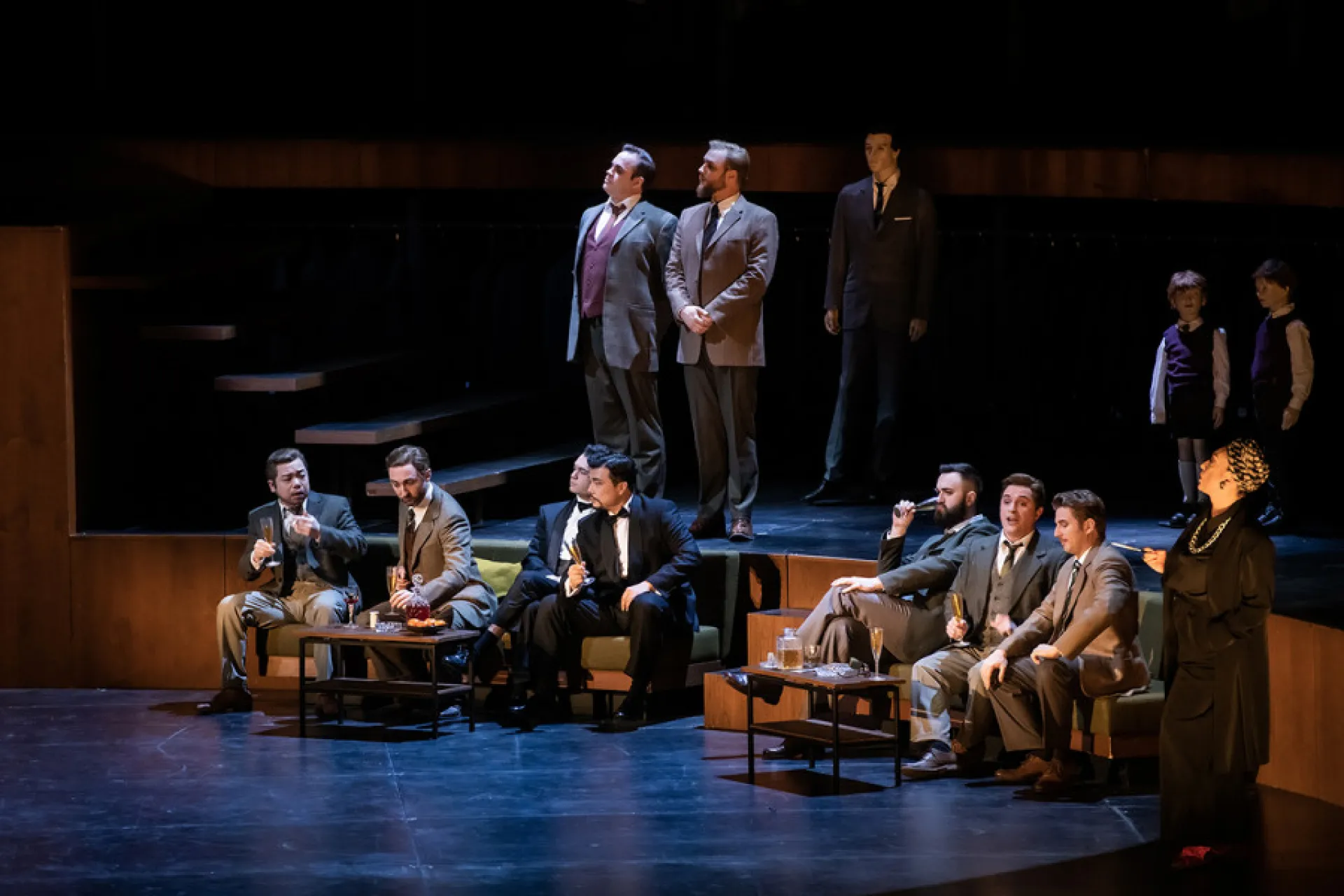
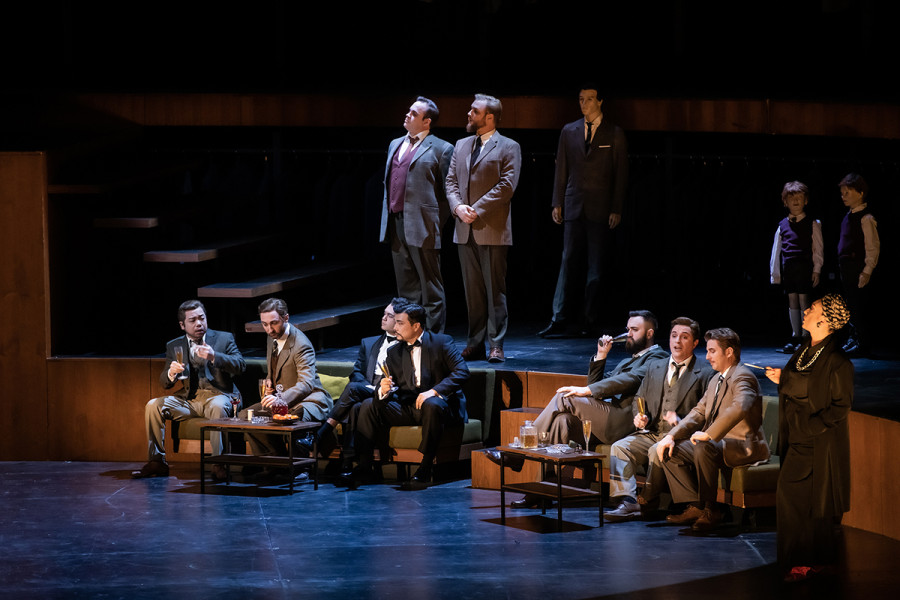
A great terrace in the Palace of Herod, set above the banqueting hall. Some soldiers are leaning over the balcony. To the right there is a gigantic staircase, to the left, at the back, an old cistern surrounded by a wall of green bronze. The moon is shining very brightly.


Narraboth gazes from a terrace in Herod's palace into the banquet hall at the beautiful Princess Salome; he is in love with her, and apotheosizes her, much to the disgusted fearfulness of the Page of Herodias. The voice of the Prophet Jochanaan is heard from his prison in the palace cistern; Herod fears him and has ordered that no one should contact him, including Jerusalem's High Priest.


Tired of the feast and its guests, Salome flees to the terrace. When she hears Jochanaan cursing her mother (Herodias), Salome's curiosity is piqued. The palace guards will not honor her petulant orders to fetch Jochanaan for her, so she teasingly works on Narraboth to bring Jochanaan before her. Despite the orders he has received from Herod, Narraboth finally gives in after she promises to smile at him.


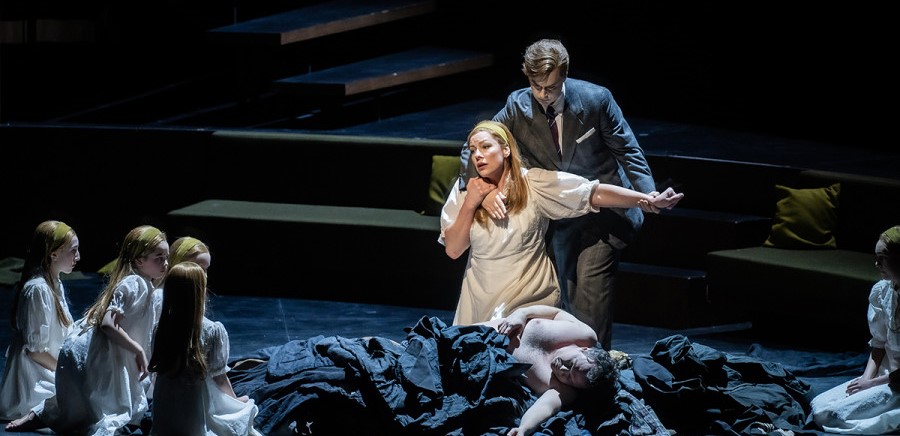
Jochanaan emerges from the cistern and shouts prophecies regarding Herod and Herodias that no one understands, except Salome when the Prophet refers to her mother. Upon seeing Jochanaan, Salome is filled with an overwhelming desire for him, praising his white skin and asking to touch it, but he rejects her. She then praises his black hair, again asking to touch it, but is rejected once more. She finally begs for a kiss from Jochanaan's lips, and Narraboth, who cannot bear to hear this, kills himself. As Jochanaan is returned to the well, he preaches salvation through the Messiah.


Herod enters, followed by his wife and court. He slips in Narraboth's blood and starts hallucinating. He hears the beating of wings. Despite Herodias' objections, Herod stares lustfully at Salome, who rejects him. Jochanaan harasses Herodias from the well, calling her incestuous marriage to Herod sinful. She demands that Herod silence him. Herod refuses, and she mocks his fear. Five Jews argue concerning the nature of God. Two Nazarenes tell of Christ's miracles; at one point they bring up the raising of Jairus' daughter from the dead, which Herod finds frightening.


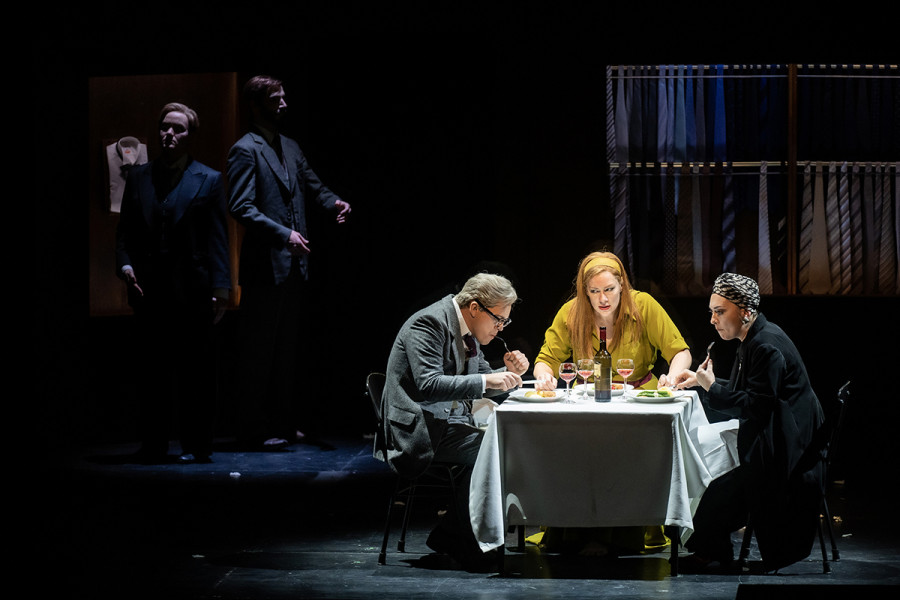
Herod asks for Salome to eat with him, drink with him; indolently, she twice refuses, saying she is not hungry or thirsty. Herod then begs Salome to dance for him, Tanz für mich, Salome, though her mother objects. He promises to reward her with her heart's desire—even if it were one half of his kingdom.


After Salome inquires into his promise, and he swears to honor it, she prepares for the "Dance of the Seven Veils". This dance, very oriental in orchestration, has her slowly removing her seven veils, until she lies naked at his feet. Salome then demands the head of the prophet on a silver platter. Her mother cackles in pleasure. Herod tries to dissuade her with offers of jewels, peacocks, and the sacred veil of the Temple. Salome remains firm in her demand for Jochanaan's head, forcing Herod to accede to her demands. After a desperate monologue by Salome, an executioner emerges from the well and delivers the severed head as she requested.


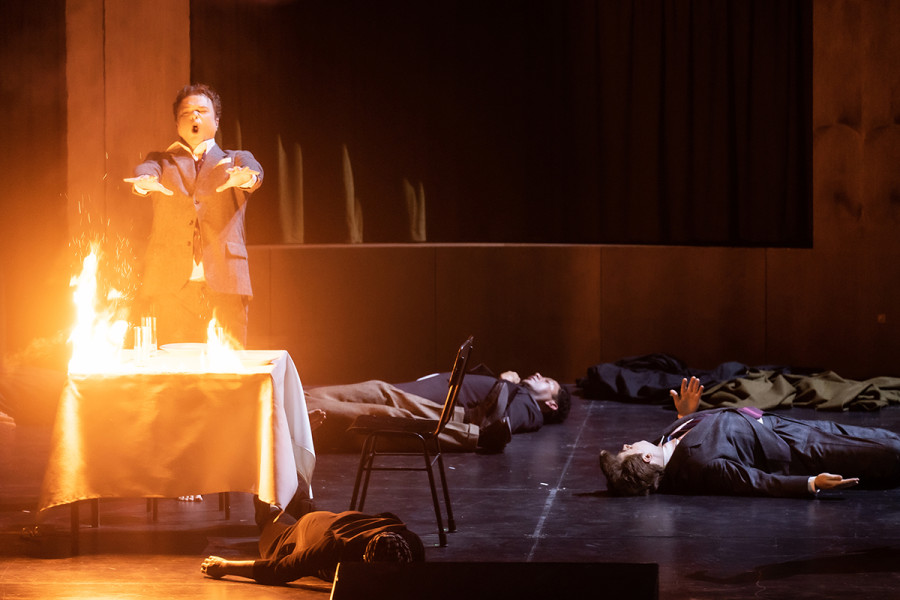
Salome now declares her love for the severed head, caressing it and kissing the prophet's dead lips passionately. Horrified, Herod orders his soldiers, "Kill that woman!" They rush forward and crush Salome under their shields.

Introduction: 45 minutes before the performance in the Rang Foyer on the right 

Language: In German language with German and English surtitels 

Duration: 1 hrs 45 mins / no interval 

Age recommendation: from age 16 

Co-production: Kindly supported by Förderkreis der Deutschen Oper Berlin e. V.

Cast

A music drama in one act
Music and libretto by Richard Strauss
after the play Salome by Oscar Wilde
Translation by Hedwig Lachmann
World premiere 9th December 1905 in Dresden
Premiere at the Deutsche Oper Berlin: 24th January 2016


Team 

Conductor: Marc Albrecht

Director: Claus Guth

Stage design, Costume design: Muriel Gerstner

Light design: Olaf Freese

Choreographer: Sommer Ulrickson


Cast 

Herodes: Thomas Blondelle

Herodias: Martina Serafin

Salome: Elisabet Strid

Jochanaan: Nicholas Brownlee

Narraboth: Kieran Carrel

A Bellboy: Maria Warenberg

First Jew: Michael J. Scott

Second Jew: Thomas Cilluffo

Third Jew: Jörg Schörner

Fourth Jew: Burkhard Ulrich

Fifth Jew: Padraic Rowan

First Nazarene: Nicolai Elsberg

Second Nazarene: Kyle Miller

First Soldier: Mark Kurmanbayev

Second Soldier: Tobias Kehrer

A Cappadocier: Young Choi

A Slave: Thomas Cilluffo

Orchestra: Orchester der Deutschen Oper Berlin

Venue
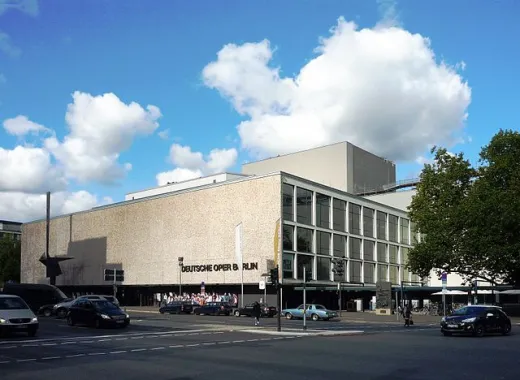
Deutsche Oper Berlin

The Deutsche Oper Berlin is an opera company located in the Charlottenburg district of Berlin, Germany. The resident building is the country's second largest opera house and also home to the Berlin State Ballet.

The company's history goes back to the Deutsches Opernhaus built by the then independent city of Charlottenburg—the "richest town of Prussia"—according to plans designed by Heinrich Seeling from 1911. It opened on November 7, 1912 with a performance of Beethoven's Fidelio, conducted by Ignatz Waghalter. After the incorporation of Charlottenburg by the 1920 Greater Berlin Act, the name of the resident building was changed to Städtische Oper (Municipal Opera) in 1925.


Deutsches Opernhaus, 1912
With the Nazi Machtergreifung in 1933, the opera was under control of the Reich Ministry of Public Enlightenment and Propaganda. Minister Joseph Goebbels had the name changed back to Deutsches Opernhaus, competing with the Berlin State Opera in Mitte controlled by his rival, the Prussian minister-president Hermann Göring. In 1935, the building was remodeled by Paul Baumgarten and the seating reduced from 2300 to 2098. Carl Ebert, the pre-World War II general manager, chose to emigrate from Germany rather than endorse the Nazi view of music, and went on to co-found the Glyndebourne opera festival in England. He was replaced by Max von Schillings, who acceded to enact works of "unalloyed German character". Several artists, like the conductor Fritz Stiedry or the singer Alexander Kipnis followed Ebert into emigration. The opera house was destroyed by a RAF air raid on 23 November 1943. Performances continued at the Admiralspalast in Mitte until 1945. Ebert returned as general manager after the war.

After the war, the company in what was now West Berlin used the nearby building of the Theater des Westens until the opera house was rebuilt. The sober design by Fritz Bornemann was completed on 24 September 1961. The opening production was Mozart's Don Giovanni. The new building opened with the current name.


Accomodation

Buy now

Gift vouchers

Gift someone an unforgettable night at the opera.
Choose a gift coupon and let them pick the performance they love—music, drama, and world-class artistry, all in one elegant experience.
Berlin Opera Tickets
Facebook
Payment
Ticket search
Google Play
App Store
© 2026 RM EUROPA TICKET GmbH
Whatsapp