


en
en v
Phone
Cart0 Tickets
Total: 0
Account
Calendar
Search
Menu

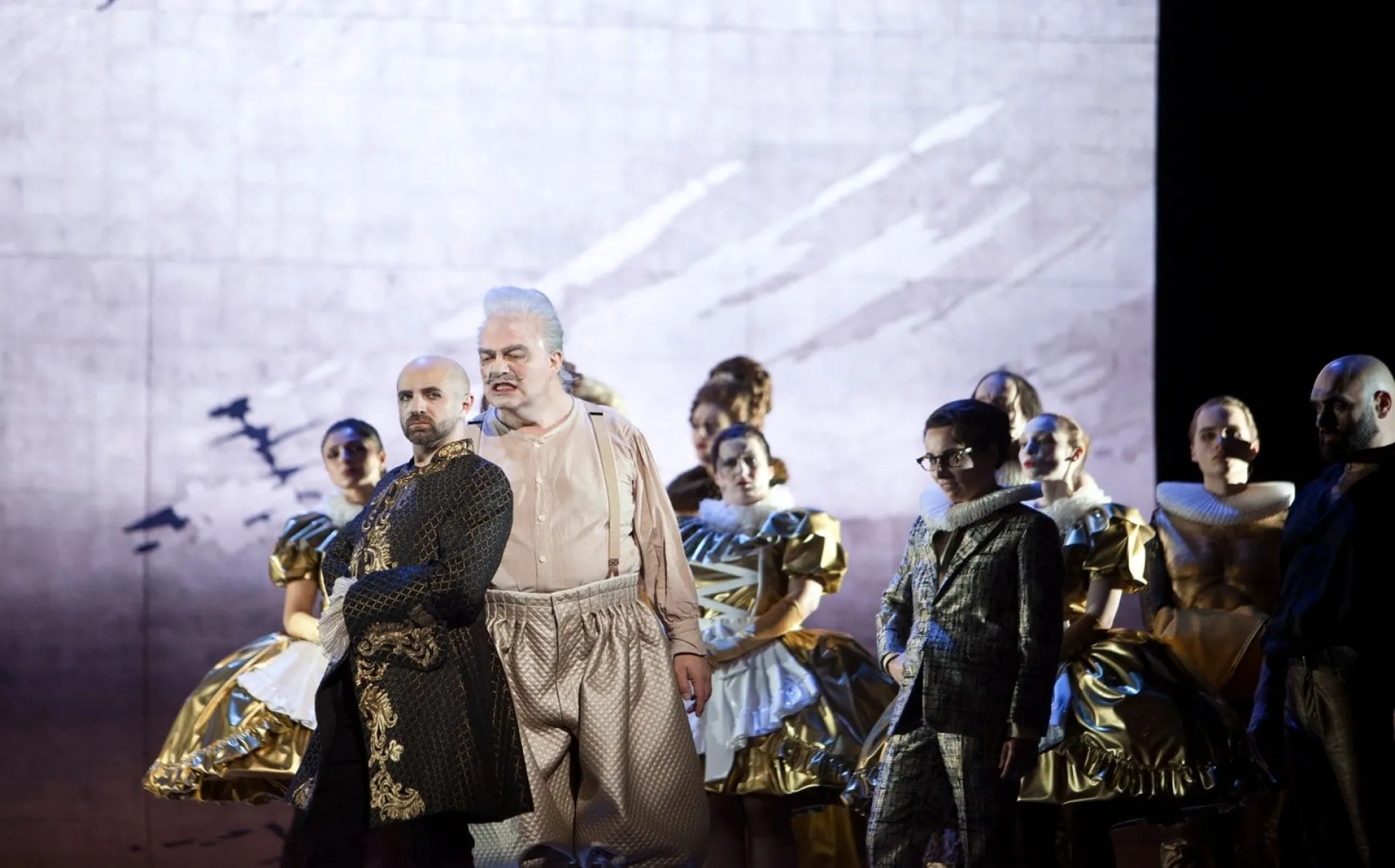
The Coronation of Poppaea

VenueState Opera Unter den Linden
CalendarFri 20 Nov 2026 - Thu 26 Nov 2026
Synopsis/Details


The Coronation of Poppea

Opera musicale in a prologue and three acts (1642)

Music by Claudio Monteverdi
Libretto by Giovanni Francesco Busenello


Duration: approx. 3:45 hrs, including one interval after Act 1

Language: In Italian with German and English surtitles

Recommended age: 16 and above


For his final opera, Claudio Monteverdi first drew in 1642 on a subject featuring historically documented figures, thereby creating the first “sex-and-crime story” in opera history. Like a political thriller, this early Baroque masterpiece tells of power, passionate love, and their potential for abuse.

Poppea Sabina, the most beautiful woman in Rome, desires nothing less than to become empress at the side of Emperor Nero. She uses all her seductive powers to persuade Nero to banish his wife Ottavia. When the imperial philosopher Seneca opposes this, he must pay with his life. Meanwhile, Ottavia incites Ottone, who has been rejected and betrayed by Poppea, to murder her power-hungry rival. The assassination attempt is ultimately foiled: Ottavia is banished, and Poppea achieves the goal of her plans, desires, and dreams.

Monteverdi and his librettist Busenello demonstrate at the end of their opera a distinctly bitter view of the world: none of their characters is without flaw. In the end, those who act most ruthlessly are the ones who triumph. At the same time, Monteverdi achieves the remarkable feat of portraying his sometimes caricature-like characters with finely differentiated musical characterization, occasionally exposing them humorously while also repeatedly evoking empathy. His strikingly avant-garde music, with expressive melodies and bold harmonies, seduces the listener into rooting for the adulterers despite their scandalous behavior.


Plot


A day at Emperor Nero’s court in 62 A.D.

A fight has broken out over whether virtue or fate enables a rise into the highest spheres, but this is rudely interrupted when love comes into play. It will be seen during the course of the day that love alone determines the course that things will take.
Tortured by jealously, Otho sings of the beauty of his beloved Poppea, who in the meantime is enjoying herself with Nero.
Two soldiers of the imperial palace guard criticize Nero’s rule and the powerful in the empire.
Poppea delays Nero’s departure as long as possible, until he declares that their love must remain secret until Octavia is banished.
Poppea hopes to become Empress. But Arnalta warns her against expecting too much from her affair with Nero.
Octavia complains about Nero’s behavior. Her old nurse suggests that the Empress should take on a lover as consolation.
The philosopher and Emperor’s tutor Seneca advises the Empress to bear the abjection valiantly. Her servant loses his self-control and mocks Seneca. Octavia asks him to put in a good word for her among the people.
Nero tells Seneca that he wants to abandon Octavia and marry Poppea. Seneca argues against it.
Poppea reminds Nero of their joint night of love. He promises her to order Seneca to commit suicide and to crown her Empress the very same day.
Ortho accuses Poppea of infidelity. She explains to him that she has to leave him behind on her way to power. Arnalta feels sorry for Otho. Otho calls himself to order.
Drusilla, a lady of the imperial court, has loved Otho for many years. He decides to return her love, but his heart still belongs to Poppea.
A confidant of Nero delivers Seneca an order to commit suicide. Seneca declares himself ready to fulfill the command. His students plead with him in vain to remain alive.
Octavia’s servant and her maid Damigella discover the joys of love.


Intermission


After Seneca’s death, a poetic competition breaks out between Nero and his confidant, Seneca’s nephew and poet Lucan, on the subject of “Poppea’s beauty”.
Provoked by Drusilla’s endless love for Otho, Octavia’s servant attacks the old nurse. She contemplates life’s fugacity.
Otho tells Drusilla that he will kill Poppea and renews his vow of love. Drusilla gives him her clothing as a disguise for the murder.
Poppea calls on Amor’s help in carrying out her plan to become Empress. Arnalta sings her to sleep — and herself as well. When Otho wants to kill Poppea, she is protected by Amor. Arnalta thinks the escaping Otho is Drusilla. Amor announces that he will have Poppea crowned Empress. Arnalta accuses Drusilla of attempting to kill Poppea.
Drusilla initially insists on her innocence, but then confesses in order to die in Otho’s stead. But he will have none of this. When both claim they are responsible for the attempted murder, Nero banishes Otho. Drusilla is allowed to accompany him into exile. Octavia is also banished as the instigator of the plot.
Nero swears to crown Poppea empress that very same day.
Arnalta is pleased at the social ascent of her mistress and her own as well.
Ottavia departs in tears from Rome.
Nero crowns Poppea. The gods of love sing their praise. Poppea and Nero celebrate their lust for one another.

Cast

Musical direction: Diego Fasolis
Production: Eva-Maria Höckmayr
Set design: Jens Kilian
Costumes: Julia Rösler
Lighting: Olaf Freese, Irene Selka


Poppea: Anna Prohaska
Nero: Raffaele Pe
Octavia: Anna Kissjudit
Otho: Carlo Vistoli
Seneca: Manuel Winckhler
Arnalta: Mark Milhofer
Drusilla: Evelin Novak
Liberto, Lucan: Dionysios Avgerinos
First Soldier, Consul: Álvaro Diana
Second Soldier: Junho Hwang
Tribune: Martin Iivarinen
Valletto, Amor: Etīna Emīlija Saulīte
Damigella, Fortuna: Defne Celik
Nurse: Marcel Beekman


Akademie für Alte Musik Berlin

Venue
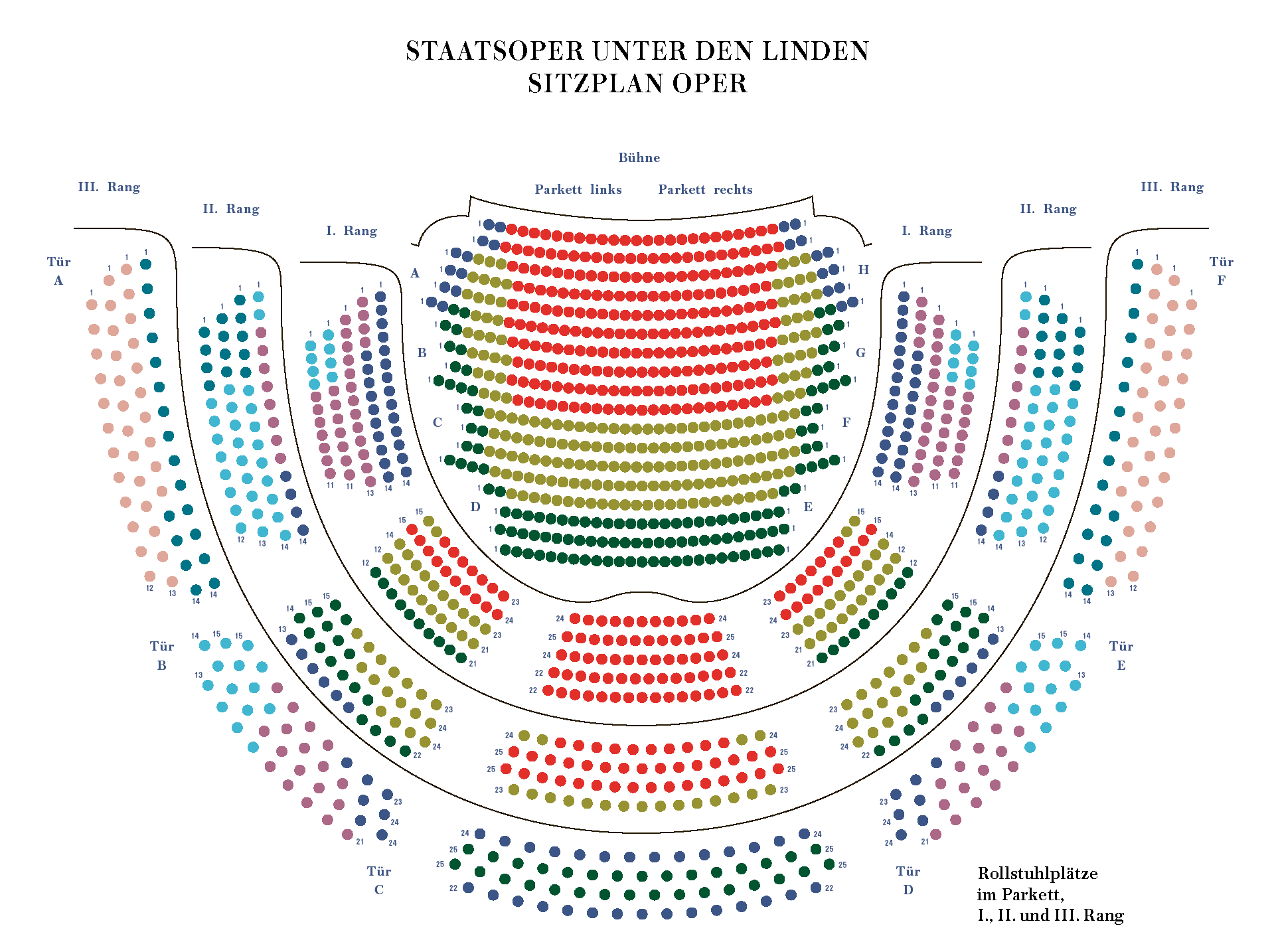
State Opera Unter den Linden

Staatsoper Unter den Linden is one of Berlin's most prestigious opera houses, with a rich history and significant cultural impact.


History:
The Staatsoper Unter den Linden was originally built between 1741 and 1743, under the direction of architect Georg Wenzeslaus von Knobelsdorff. It was commissioned by Frederick II of Prussia and was initially named the Königliche Oper (Royal Opera). The opera house has undergone several renovations and reconstructions, notably after World War II damage. It reopened in 1984, following a major renovation.


Construction:
The original design was characterized by its Baroque style, featuring an elegant façade and a grand entrance. The building was reconstructed in the 1950s and 1980s, maintaining its classical exterior while modernizing the interior. The façade features a classic portico with six Corinthian columns and a prominent central pediment.


Interior:
The interior is known for its opulent and classical design. The auditorium is renowned for its acoustics and grandeur, with luxurious velvet seats and elaborate decorations. The stage and seating areas have been updated to meet modern performance standards while preserving historical aesthetics.


Concerts and Performances:
The Staatsoper Unter den Linden hosts a variety of performances, including operas, orchestral concerts, and ballet. It is home to the Staatskapelle Berlin, one of Germany's leading orchestras. The opera house is celebrated for its high-quality productions and its role in Berlin’s vibrant cultural scene.


JOURNEY

The Staatsoper Unter den Linden has completely barrier-free access due to its excellent public transport connections.

ADDRESS: Unter den Linden 7; 10117 Berlin

SUBURBAN RAILWAY
S+U Friedrichstraße (S1, S2, S5, S7, S25, S75)


SUBWAY
Hausvogteiplatz (U2)
Museumsinsel (U5)
Stadtmitte (U2, U6)
Unter den Linden (U5, U6)


BUS
Staatsoper (100, 245, 300)
Unter den Linden/Friedrichstraße (100, 147, 245, 300, N6)


PARKING
Q-PARK parking garage Unter den Linden/Staatsoper
Bebelplatz, 10117 Berlin
There are five electric charging stations in the parking garage. Further information can be found here.

The underground car park on Bebelplatz offers disabled parking spaces and direct access to the opera house. On entering the car park between 5.30pm and 11.30pm, the maximum parking fee is €7. To use this tariff, enter your parking ticket in one of the pay machines and the message »Theatertarif« will appear on the display. Please note that it is not possible to use the tariff if you enter the car park before 5.30pm. so it will not be shown on the display. TIP: If you pay the theatre tariff at the pay machine before the event, you can avoid unnecessary waiting after the show.


Buy now

Gift vouchers

Gift someone an unforgettable night at the opera.
Choose a gift coupon and let them pick the performance they love—music, drama, and world-class artistry, all in one elegant experience.
Berlin Opera Tickets
Facebook
Payment
Ticket search
Google Play
App Store
© 2026 RM EUROPA TICKET GmbH
Whatsapp