


en
en v
Phone
Cart0 Tickets
Total: 0
Account
Calendar
Search
Menu

The Magic Flute

VenueState Opera Unter den Linden
CalendarSun 29 Nov 2026 - Sat 29 May 2027
Synopsis/Details

The Magic Flute
Grand Opera in Two Acts (1791)
Music by Wolfgang Amadeus Mozart
Libretto by Emanuel Schikaneder


Duration: Approx. 3 hours, including one interval after Act I
Language: Performed in German with German and English surtitles
Recommended age: 8 years and above


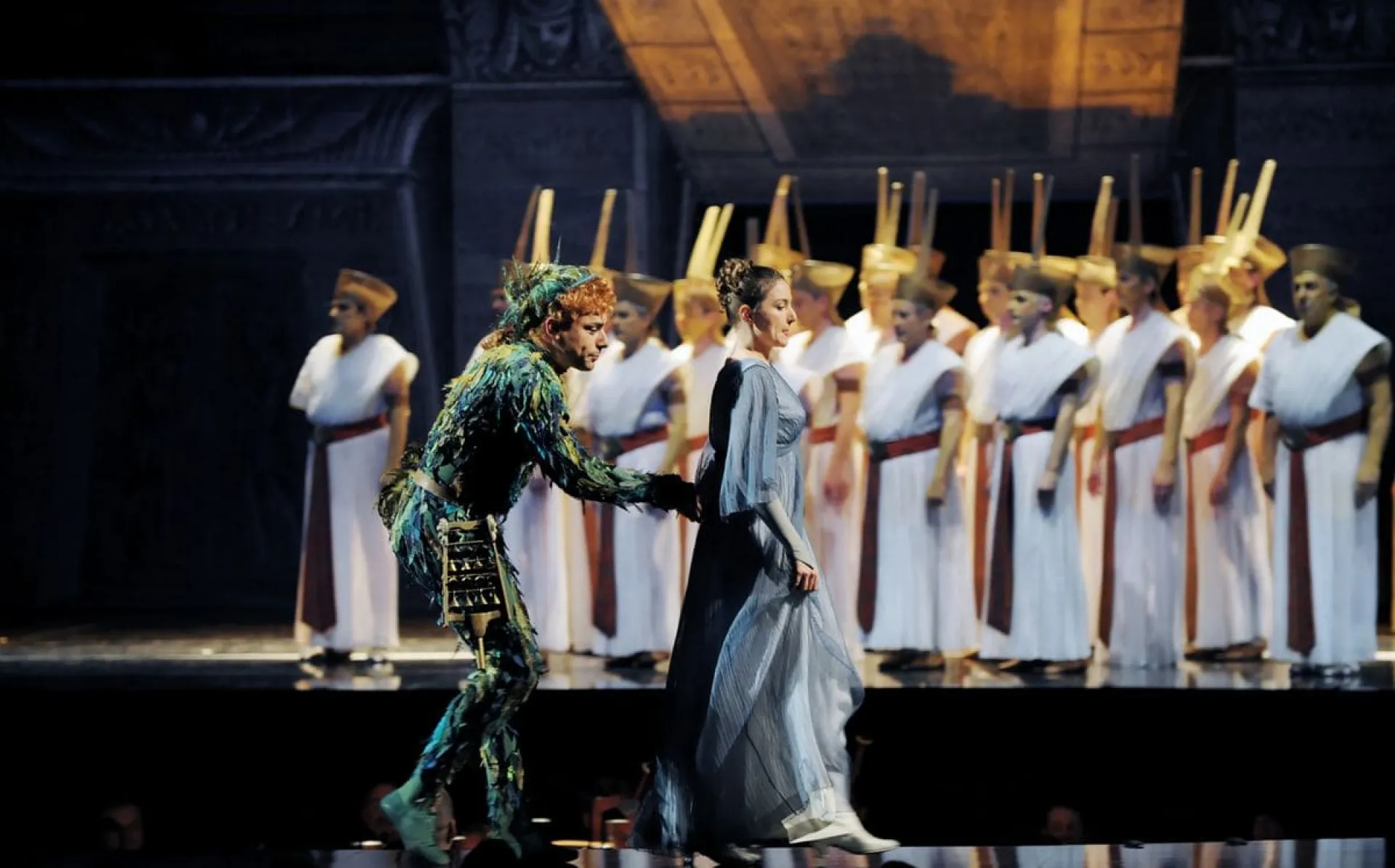
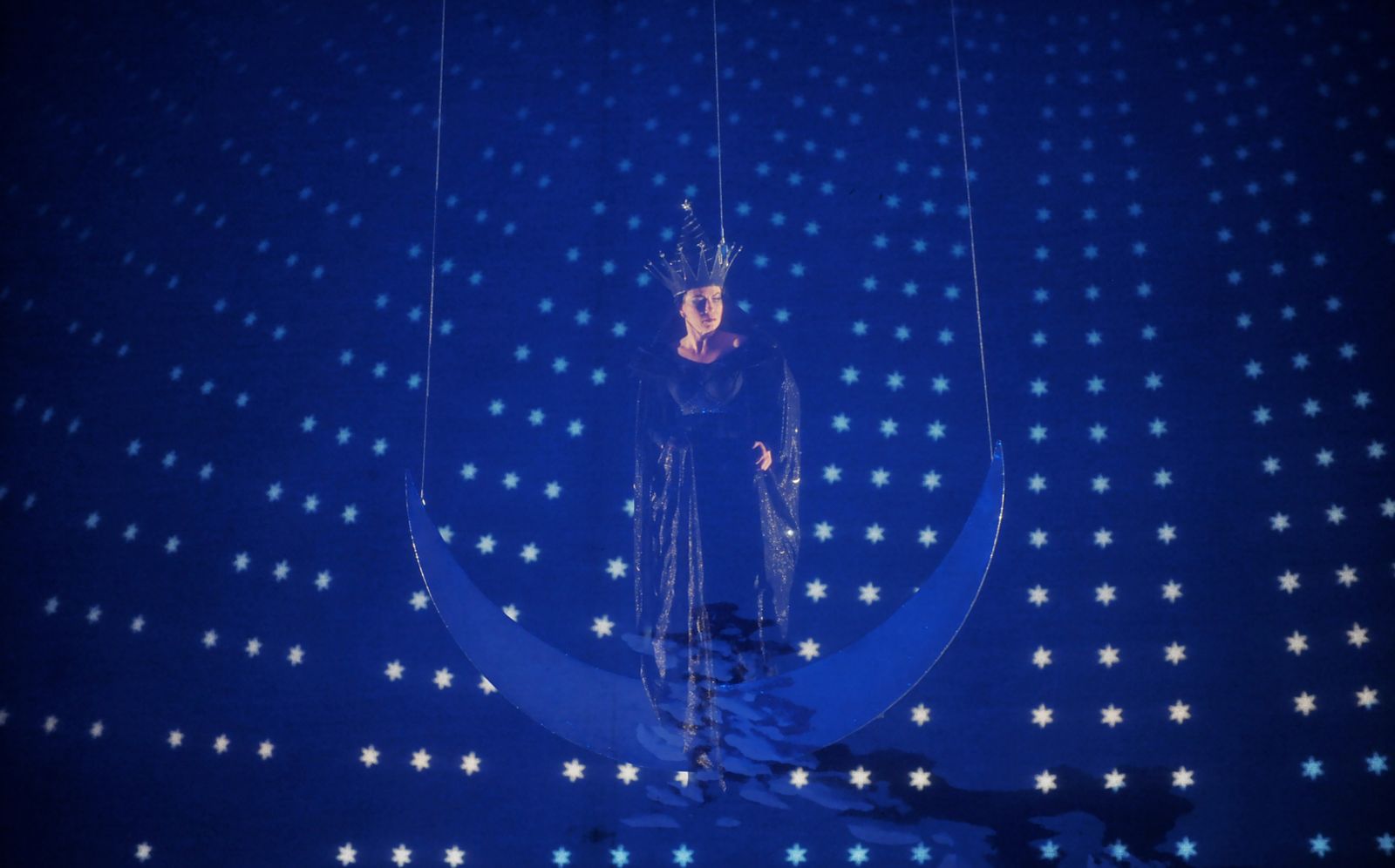
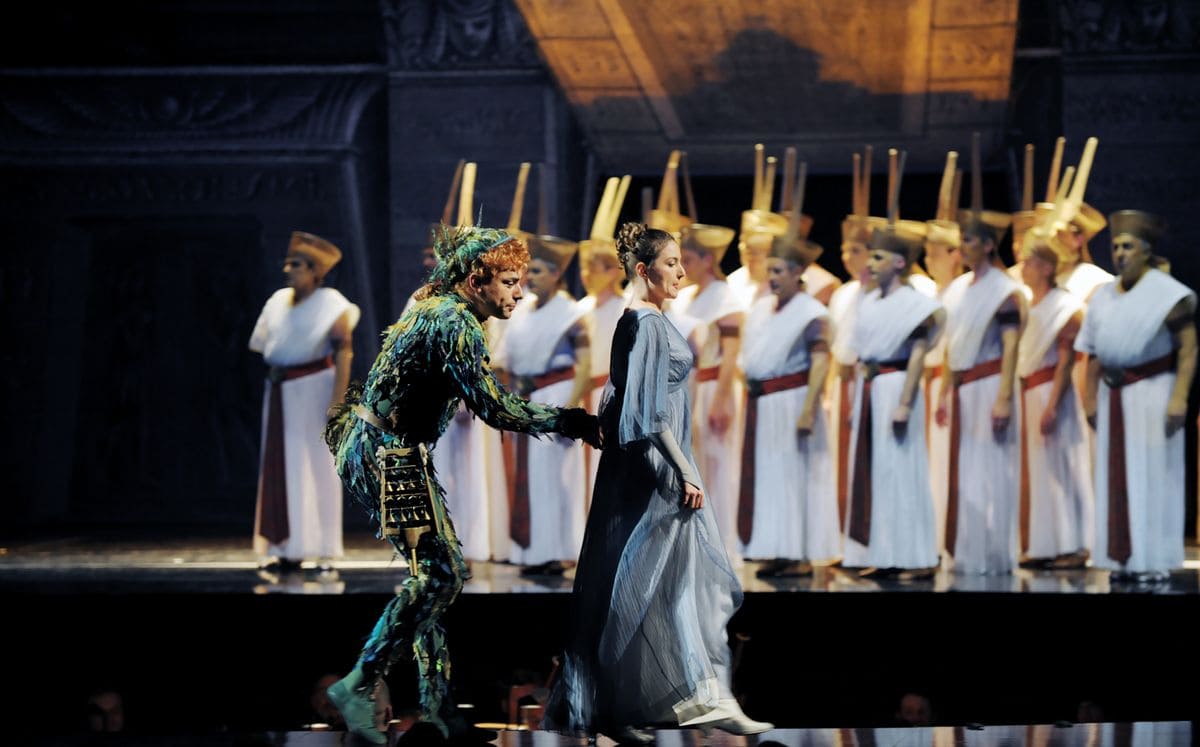
It is one of the classics in the repertoire of the State Opera: August Everding's production of Wolfgang Amadeus Mozart's The Magic Flute. What makes it unique is the reconstruction of Karl Friedrich Schinkel's stage designs, originally created in 1816 for the former Court Opera on Unter den Linden. Among them is the celebrated starry sky of the Queen of the Night, an iconic masterpiece of stage design that captivated audiences then and continues to do so today.

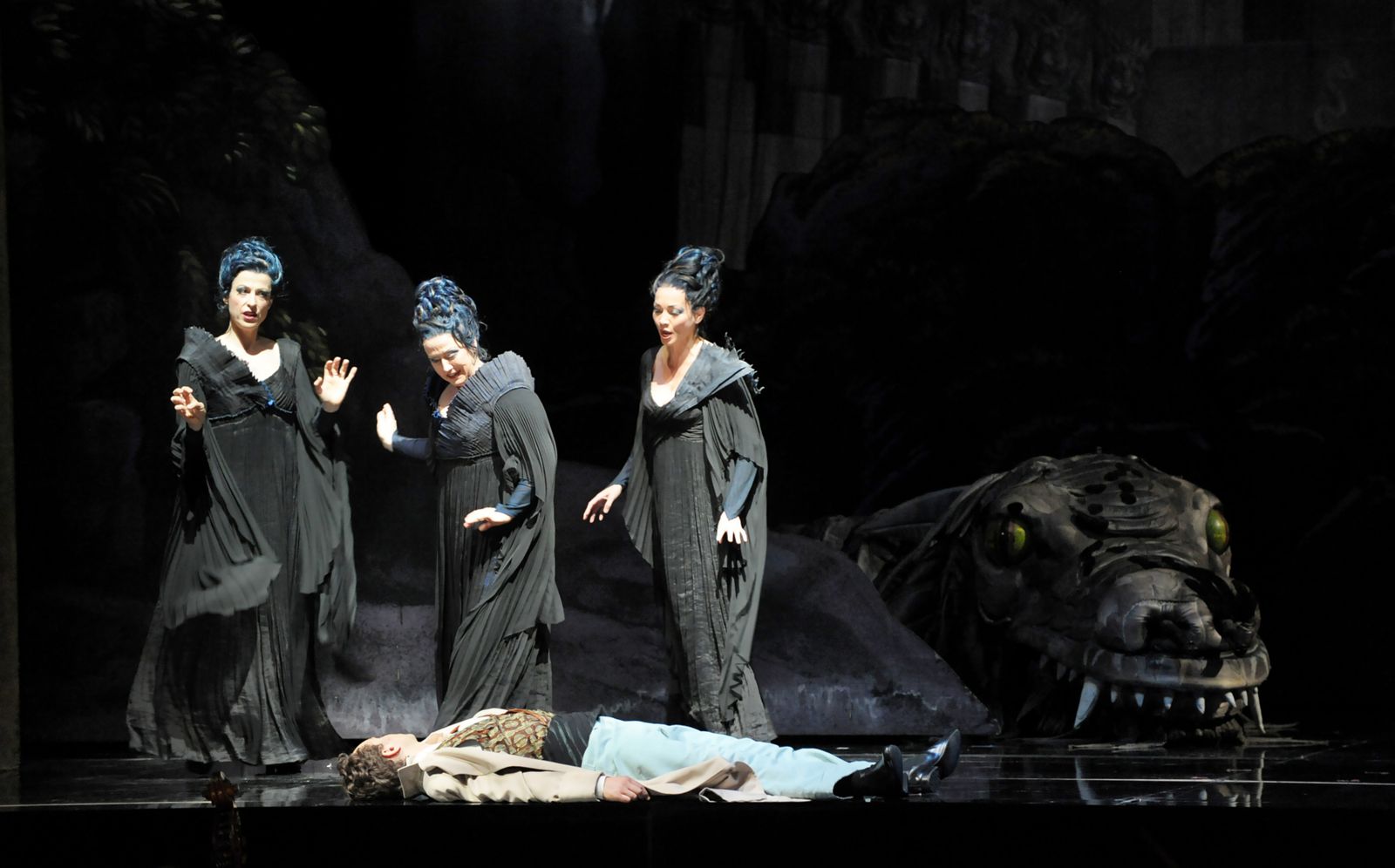
Director August Everding, however, was far from creating a museum piece. Drawing on designs that are now more than 200 years old, he brought this theatrical world vividly to life in a timeless and spirited production. Premiering at the State Opera in 1994, it has lost none of its charm, wit, or vitality. Prince Tamino is rescued at the last moment from a giant serpent by the Queen of the Night's Three Ladies. They show him a portrait of the Queen's daughter, Pamina, and he instantly falls in love with her. Together with the eccentric bird catcher Papageno, he sets out to find his beloved, who, as he learns, is being held by the High Priest of the Sun, Sarastro. To win the women they love, Tamino and Papageno must undergo a series of demanding trials.


Plot


Backround

In a mythical past, a king and queen ruled together over a kingdom of day and night. Their daughter was called Pamina. When the king died, he gave his power – symbolized by the mighty circle of the sun – not to the queen, but to the Brotherhood headed by Sarastro, thereby dividing the realm of light and shadow in two. After the king’s death, however, his wife attempted to win back the power she had lost as the Queen of the Night. In order to remove Pamina from her mother’s negative influence, Sarastro has had her kidnapped.


Act one

While hunting, the young prince Tamino is lured into the realm controlled by the Queen of the Night and threatened by a monster. Fearing for his life, he loses consciousness. The Three Ladies who attend the Queen of the Night quarrel over the unconscious young man. When the prince awakes, the bird catcher Papageno tells him where he is. On the queen’s orders, the Three Ladies give Tamino a portrait of the princess Pamina, and he falls instantly and deeply in love. The queen attempts to use this love to recover Pamina and, with her, the powerful circle of the sun from Sarastro. Tamino is determined to free Pamina from Sarastro. Papageno is told to accompany him, and both are equipped with magic instruments, a flute and a set of bells. Three Boys are to guide them as good spirits. In the meantime, Pamina attempts to flee Sarastro’s control in order to escape the cruel slave overseer Monostatos. Papageno, however, finds her and tells her that Tamino loves her, and they flee together. When Tamino meets the Speaker of the Brotherhood at the gates of the temple, he begins to doubt what he has heard of Sarastro’s evil intentions. In his uncertainty, he turns to the invisible higher powers and, for the first time, discovers his flute’s magic powers. Pamina and Papageno’s attempt to flee is thwarted by the arrival of Sarastro, but Pamina decides to tell Sarastro the truth. She and Tamino meet. Sarastro has Tamino and Papageno brought to the Temple of Wisdom. As a woman, Pamina cannot accompany them.


Act two

Sarastro asks the members of the Order to let Tamino face the trials that will initiate him into the Brotherhood and, at the same time, announces that he intends for Pamina and Tamino to wed. As their first trial, Tamino and Papageno are forbidden to speak, an utter impossibility for Papageno. The Queen of the Night sees that her plans are being foiled by Sarastro. She forces her way into the temple and calls on Pamina to kill Sarastro. Sarastro, however, uses humanity and forgiveness to fight the queen’s desire for vengeance. The Three Boys return to Tamino and Papageno the magic instruments that were taken from them before their admission to the temple. Pamina cannot understand Tamino’s silence and doubts his love. She decides to kill herself and is stopped by the Three Boys at the last moment. In the end, the two lovers pass the final, decisive test in the temple of fire and water together. In the meantime, Papageno, too, decides to kill himself because the Papagena he had found at last has been taken from him. Here, too, the Three Boys arrive to save him. Monostatos allies himself with the Queen of the Night, but their attack is thwarted and the sun banishes the darkness. Together with the Queen of the Night, Sarastro is able to turn over the mighty circle of the sun to the new king and queen, Tamino and Pamina.

Cast

Musical Director: Tim Fluch
Production: August Everding
Set Design: Fred Berndt, after Karl Friedrich Schinkel
Costume Design: Dorothée Uhrmacher
Lighting Design: Franz Peter David
Chorus Master: Gerhard Polifka


Pamina: Evelin Novak; Serafina Starke; Sonja Herranen
Tamino: Siyabonga Maqungo; Andrés Moreno García; Johan Krogius; Siyabonga Maqungo
Papageno: Jaka Mihelač; Carles Pachon; Gyula Orendt
Sarastro: René Pape; Manuel Winckhler
Queen of the Night: Maria Kokareva; Regina Koncz; Alina Wunderlin
Papagena: Defne Celik
Three Ladies: Etīna Emīlija Saulīte, Rebecka Wallroth, Marina Prudenskaya; Anna Samuil, Rebecka Wallroth, Anna Kissjudit; Etīna Emīlija Saulīte, Natalia Skrycka, Marina Prudenskaya
Monostatos: Florian Hoffmann
Speaker: Arttu Kataja; Roman Trekel
First Priest: Chen Li
Second Priest: Arttu Kataja; Roman Trekel
First Man in Armour: Stephan Rügamer
Second Man in Armour: Manuel Winckhler; Friedrich Hamel
Three Boys: Soloists of the Children's Chorus of the State Opera


State Opera Chorus, Staatskapelle Berlin

Venue
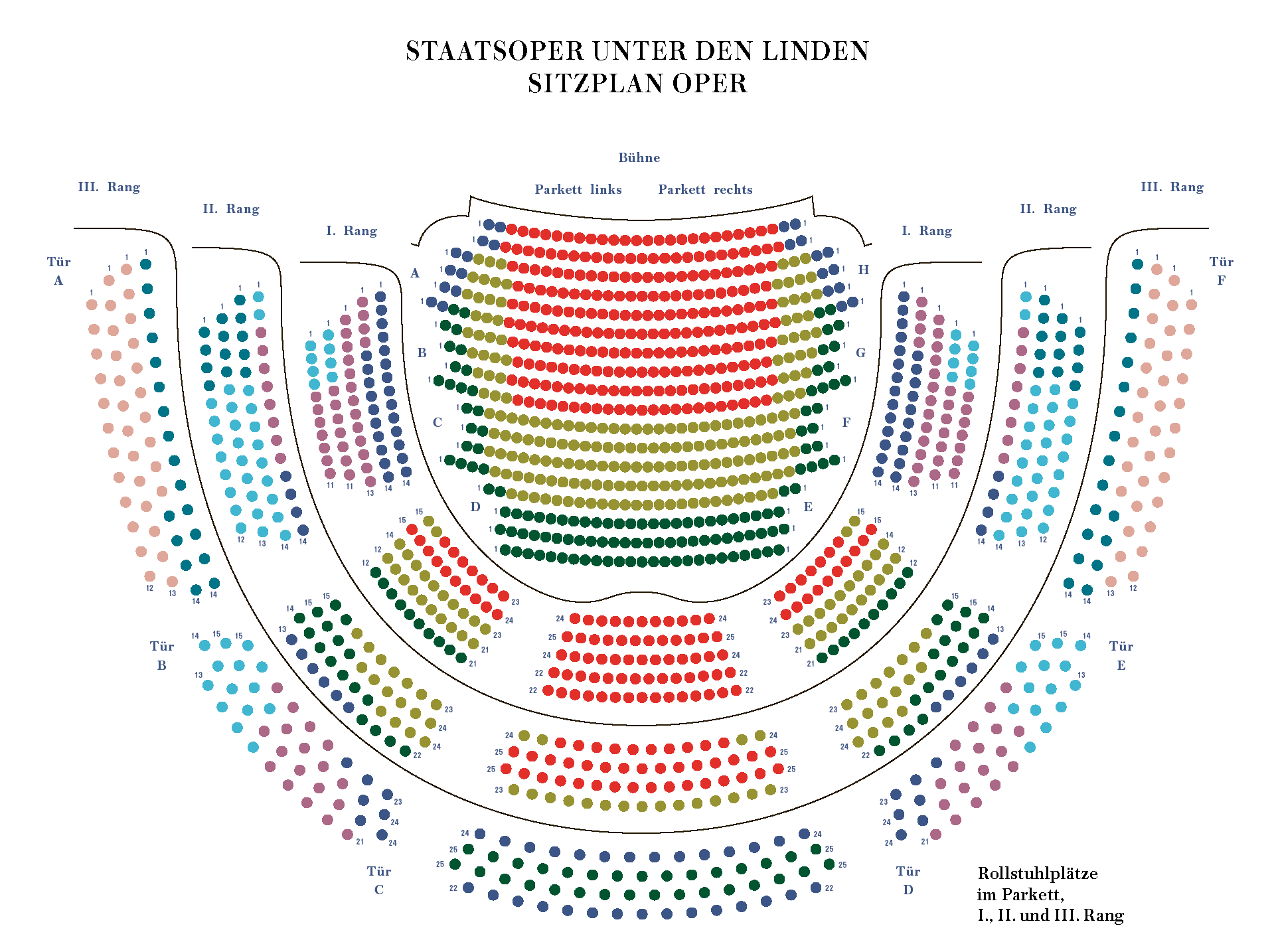
State Opera Unter den Linden

Staatsoper Unter den Linden is one of Berlin's most prestigious opera houses, with a rich history and significant cultural impact.


History:
The Staatsoper Unter den Linden was originally built between 1741 and 1743, under the direction of architect Georg Wenzeslaus von Knobelsdorff. It was commissioned by Frederick II of Prussia and was initially named the Königliche Oper (Royal Opera). The opera house has undergone several renovations and reconstructions, notably after World War II damage. It reopened in 1984, following a major renovation.


Construction:
The original design was characterized by its Baroque style, featuring an elegant façade and a grand entrance. The building was reconstructed in the 1950s and 1980s, maintaining its classical exterior while modernizing the interior. The façade features a classic portico with six Corinthian columns and a prominent central pediment.


Interior:
The interior is known for its opulent and classical design. The auditorium is renowned for its acoustics and grandeur, with luxurious velvet seats and elaborate decorations. The stage and seating areas have been updated to meet modern performance standards while preserving historical aesthetics.


Concerts and Performances:
The Staatsoper Unter den Linden hosts a variety of performances, including operas, orchestral concerts, and ballet. It is home to the Staatskapelle Berlin, one of Germany's leading orchestras. The opera house is celebrated for its high-quality productions and its role in Berlin’s vibrant cultural scene.


JOURNEY

The Staatsoper Unter den Linden has completely barrier-free access due to its excellent public transport connections.

ADDRESS: Unter den Linden 7; 10117 Berlin

SUBURBAN RAILWAY
S+U Friedrichstraße (S1, S2, S5, S7, S25, S75)


SUBWAY
Hausvogteiplatz (U2)
Museumsinsel (U5)
Stadtmitte (U2, U6)
Unter den Linden (U5, U6)


BUS
Staatsoper (100, 245, 300)
Unter den Linden/Friedrichstraße (100, 147, 245, 300, N6)


PARKING
Q-PARK parking garage Unter den Linden/Staatsoper
Bebelplatz, 10117 Berlin
There are five electric charging stations in the parking garage. Further information can be found here.

The underground car park on Bebelplatz offers disabled parking spaces and direct access to the opera house. On entering the car park between 5.30pm and 11.30pm, the maximum parking fee is €7. To use this tariff, enter your parking ticket in one of the pay machines and the message »Theatertarif« will appear on the display. Please note that it is not possible to use the tariff if you enter the car park before 5.30pm. so it will not be shown on the display. TIP: If you pay the theatre tariff at the pay machine before the event, you can avoid unnecessary waiting after the show.


Buy now

Gift vouchers

Gift someone an unforgettable night at the opera.
Choose a gift coupon and let them pick the performance they love—music, drama, and world-class artistry, all in one elegant experience.
Official Tickets for Berlin Opera Theater, Germany, Classical Concerts, etc.
Instagram
Payment
Ticket search
Google Play
App Store
© 2026 RM EUROPA TICKET GmbH
Whatsapp