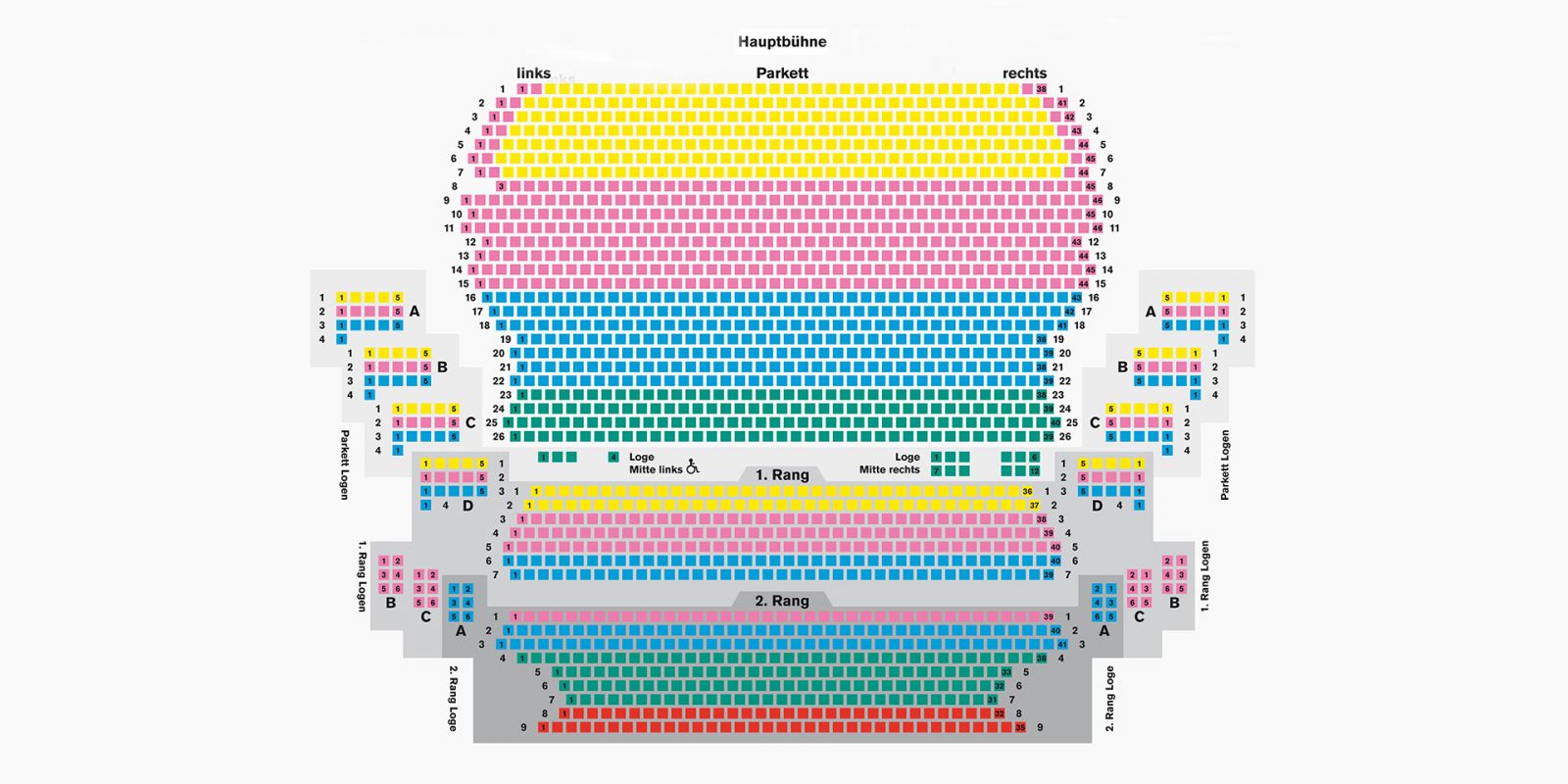
Christian Spuck’s new production places E.T.A. Hoffmann’s literary original at its center, emphasizing the tension between childhood innocence and the awakening of self-awareness.
Since Hoffmann’s 1816 story and the later ballet adaptation by Marius Petipa and Pyotr I. Tchaikovsky in 1892, The Nutcracker has become one of the most renowned classics of ballet. Originally conceived as a lavish divertissement, the work was performed repeatedly throughout the 20th century and evolved into a Christmas ritual, while its psychological and literary depth receded into the background. Christian Spuck draws on this historical tradition to create a production that remains true to classical ballet language while giving space to the nuanced aspects of Hoffmann’s story.
Musically, the production relies on Tchaikovsky’s world-famous score to give the contrasting scenes between fairy-tale lightness, dramatic tension, and surreal dreamlike imagery their distinctive sound.
This ballet is not simply a Christmas performance, but a poetic, modern reflection on growing up, self-discovery, and the boundaries between reality and imagination. Spuck’s new version is a Berlin Nutcracker, combining classical tradition with literary romance, preserving the magic of the original, and offering a contemporary, multilayered experience for both children and adults.
Synopsis
Act I
By the chapel; at the Stahlbaum House
It is Christmas Eve, and as snow flurries fall, the smallest children of the Stahlbaum family, Marie, and her brother, Fritz head towards the chapel with their nanny while the rest of the family prepare for the great event. In front of the house there is an ice-skating rink and a vendor of roasted chestnuts. One after the other, the guests – including Uncle Drosselmeier and his nephew – arrive to celebrate together with the family.
The Christmas party
While the children wait in the antechamber to be allowed inside and see the Christmas tree, Drosselmeier performs a series of magic tricks to entertain them. The doors of the salon open up, and at Drosselmeier’s command the festivities begin. The guests gather around the beautifully decorated Christmas tree, where a great number of presents are waiting for the children. Marie’s uncle entertains the guests with a dance performance. The show is about the battle between the Nutcracker and the Mouse King, in which the Nutcracker is performed by Drosselmeier’s nephew and the Princess by Louise, Marie’s sister. Drosselmeier gives a nutcracker doll to Marie, who happily dances with her new favourite. Fritz thoughtlessly grabs the nutcracker doll from Marie, breaking it. Fortunately, Drosselmeier is able to fix the toy. The Christmas festivities close with everybody joining in a dance before the guests’ departure and the children going to bed.
Marie’s dream
Full of happiness and joy, Marie falls sound asleep, naturally with the nutcracker doll she has received beside her. The clock strikes midnight. As Marie dreams, everything seems to grow to an enormous size: the Christmas tree, the gifts, and the furniture. The dance show also comes to life. The Mouse King leads mice and rats in preparations to attack the house and Christmas tree. In her fright, Marie hopes that the Nutcracker will come to her aid. At the head of an army of lead soldiers who have come to life, the Nutcracker defeats the Mouse King.
Journey to the Land of Snow
The room and the house transform into a forest winter wonderland. Marie and Nutcracker delight in the Waltz of the Snowflakes together and then dance a lovely, lyrical duet to show their feelings for each other.
Act II
The journey
Marie and Nutcracker board Drosselmeier’s board to embark on a fantastic journey together. They are accompanied by Drosselmeier. The voyage to wonderland is a long one in which the young lovers find their path blocked by bats in a cave. Drosselmeier, however, disperses them with a single blow, and his magic kingdom opens up.
The Snow Crystal Palace
The inhabitants of the fairy-tale realm adoringly welcome Prince Nutcracker and his bride, Marie. A series of dance divertissements, in which the “residents” of the realm introduce themselves, ensues. A lively Spanish trio is followed by an Oriental snake-charming dance. Three Chinese dancers then entertain the guests with jumps and fast spins before the magnificent Russian dance commences. Next, is a pas de trois, a brilliant variation for “rococo” ballerinas, which leads, as the greetings conclude, to the climax of these divertissements: the Waltz of the Flowers. After the waltz comes the grand pas de deux between Princess Marie and Prince Nutcracker, a duet constructed in keeping with classical tradition as an adagio, two variations and a coda testifying to the fulfilment of their love. In the finale, they are joined by the entire corps de ballet and the enchantingly lovely inhabitants of the Snow Crystal Palace.
Marie’s room
On Christmas morning, Marie awakes from a wonderful dream. Racing into the room is Fritz, and they share the adventures they experienced in their dream. Marie herself is unable to say whether the Christmas magic was something she dreamed or actually experienced.
 en
en 
 de
de it
it fr
fr es
es ru
ru jp
jp ro
ro







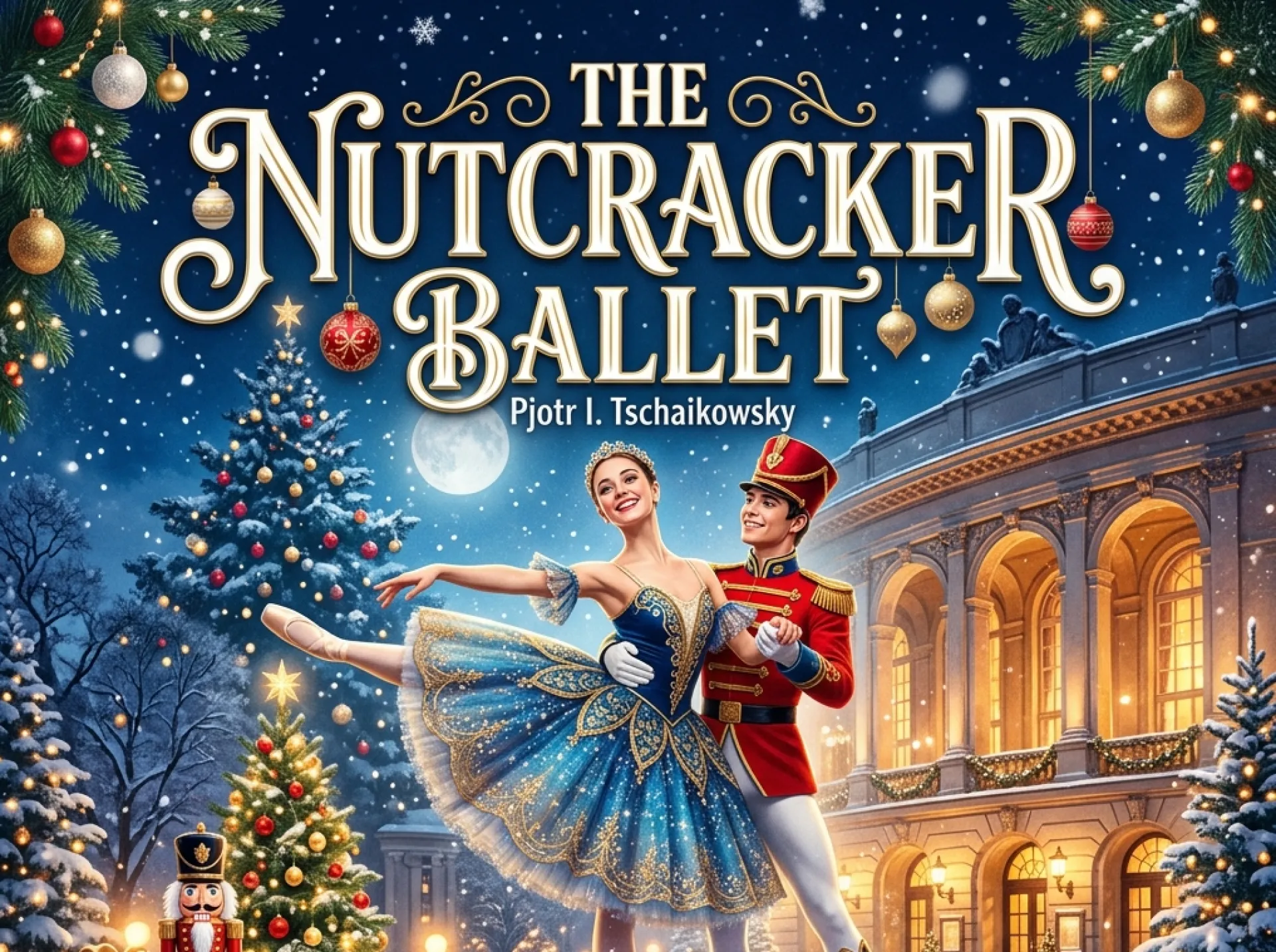
 Deutsche Oper Berlin
 Fri 27 Nov 2026 - Mon 25 Jan 2027




 RM EUROPA TICKET GmbH
 Call now
 Book now